
Is Pilates Enough for Weight Loss, Strength, and Full-Body Fitness?
Exploring the Role of Pilates in a Well-Rounded Fitness Routine
Pilates has long been hailed as a core-strengthening powerhouse, promoting better posture, flexibility, and muscle control. Enthusiasts often credit it for alleviating back pain, increasing mind-body awareness, and sculpting lean muscle.
But if you’re seeking more comprehensive fitness outcomes—like significant fat loss, cardiovascular endurance, or major strength gains—you might wonder, “Is Pilates enough on its own?”
Here, we’ll explore the foundations of Pilates, its many benefits, and where it may fall short of meeting diverse fitness goals. We’ll also discuss how to combine Pilates with other workouts to create a balanced routine.
What Pilates Is and How It Works
Developed in the early 20th century by Joseph Pilates, the method originally known as “Contrology” was created to support rehabilitation, improve functional movement, and promote mind-body awareness.
Pilates is built on principles like precision, breath control, spinal alignment, and muscular balance. It’s often described as a fusion of strength, mobility, and neuromuscular control—making it particularly effective for building foundational movement quality.
At its core, Pilates emphasizes slow, deliberate movements that target deep stabilizing muscles, especially through the trunk and pelvis. Every exercise is rooted in breath coordination and control, which helps improve movement efficiency, posture, and body awareness.
There are two main formats
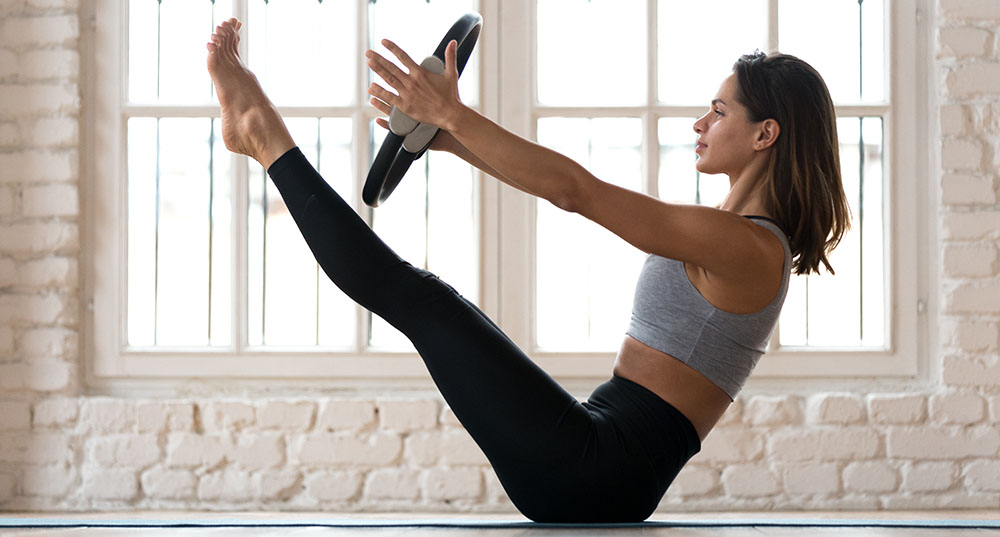
- Mat Pilates: Practiced on the floor, this version uses body weight for resistance. Movements like The Hundred, Roll-Up, and Teaser activate the abdominals, hips, and lower back. Mat Pilates is highly accessible and emphasizes core strength and control without the need for equipment.
- Reformer Pilates: Performed on a spring-loaded machine with a sliding carriage, reformer work allows for greater resistance and more variety in movement patterns. It can be used to isolate specific muscle groups, improve mobility, and gradually increase load through adjustable tension. For many people, it offers a more scalable challenge compared to mat work.
Both formats rely on mindful, precise movement rather than high reps or speed. This makes Pilates especially beneficial for:
- Posture correction
- Injury prevention and rehabilitation
- Core stabilization and pelvic alignment
- Stress reduction and nervous system regulation
While Pilates is often framed as a “core workout,” its benefits extend far beyond the abdominal muscles—particularly when it’s taught with biomechanical accuracy and thoughtful progression.
The Benefits of Pilates for Strength, Mobility, and Recovery
While often marketed as a core-focused workout, Pilates delivers a broader range of physical and neurological benefits. Its controlled, low-impact nature makes it uniquely suited for improving alignment, rebuilding foundational strength, and enhancing movement quality—particularly for those recovering from injury or managing chronic pain.
Core Strength and Spinal Stability
Pilates strengthens the body from the inside out, starting with the deep stabilizers that support the spine and pelvis. Key benefits include:
- Activation of the transverse abdominis, pelvic floor, and multifidus
- Decreased reliance on surface-level “six-pack” muscles
- Better load distribution and spinal alignment
- Reduced lower back strain and compensatory movement
- Improved posture and long-term injury prevention
Low Impact, Joint-Friendly Movement
Pilates minimizes strain on the joints while still building strength and control—making it ideal for injury-sensitive populations.
It’s especially beneficial for:
- Older adults
- Postpartum individuals
- Clients managing joint pain or recovering from surgery
Movements are often:
- Performed in non-weight-bearing positions (supine, side-lying)
- Scalable to each person's flexibility and mobility
- Focused on alignment and range of motion rather than intensity
Improved Flexibility and Postural Alignment
Rather than passive stretching, Pilates emphasizes active elongation and controlled mobility.
You’ll gain:
- Improved flexibility in the hip flexors, hamstrings, and thoracic spine
- Decompression of the spine from daily postural stress
- Strengthened postural muscles that support long hours of sitting or standing
- Reduced muscular imbalances that lead to chronic tightness
Neuromuscular Control and Mind-Body Awareness
Pilates requires concentration and breath-guided movement—sharpening the connection between your brain and your body.
Practicing regularly can help you:
- Increase proprioception and motor control
- Improve movement precision in other workouts or daily life
- Regulate your nervous system through controlled, diaphragmatic breathing
- Use the breath to reduce stress, improve recovery, and enhance focus
Potential Limitations of Pilates
Pilates is a powerful tool for strength, mobility, and postural awareness—but it isn’t a complete solution for every goal. If you're aiming for high-impact transformation in areas like endurance, fat loss, or muscular hypertrophy, you’ll likely need to supplement your routine with other forms of training.
Minimal Cardiovascular Demand
Traditional Pilates is performed at a controlled pace, often lying down or in low-load positions. While it can improve muscular endurance, it rarely elevates the heart rate into aerobic or anaerobic training zones—which are necessary for cardiovascular conditioning and calorie burn. According to the CDC’s physical activity guidelines, adults should aim for at least 150 minutes of moderate-intensity aerobic activity each week to support heart health and overall fitness.
If your goals include:
- Improving heart health
- Boosting endurance
- Burning a significant number of calories per session
…you’ll need to incorporate structured cardio, such as interval running, brisk walking, cycling, or circuit-based training.
Lack of Progressive Overload for Strength Development
Pilates emphasizes motor control and alignment, not mechanical tension. While this builds foundational strength, it doesn’t typically offer the load progression required for:
- Increasing muscle size (hypertrophy)
- Maximizing strength output
- Stimulating long-term muscle adaptation
If you're aiming to build strength beyond foundational levels, resistance training with external load—like dumbbells, barbells, or heavy resistance bands—is essential.
Limited Caloric Burn for Fat Loss
While Pilates can support body composition goals through improved muscle tone and metabolic activation, it generally doesn’t create a high enough caloric deficit to drive significant fat loss alone. Traditional sessions burn fewer calories per minute than:
- High-intensity interval training (HIIT)
- Long-duration aerobic workouts
- Compound strength circuits
To optimize fat loss, Pilates works best as part of a hybrid routine that includes higher-energy expenditure activities and nutrition oversight.
How to Complement Pilates With a Balanced Training Routine
If Pilates is your foundation, the next step is identifying what to layer on top to meet your full range of fitness goals. A smart, supportive routine combines Pilates with targeted strength training, cardiovascular conditioning, mobility work, and nutrition awareness.
When done right, this cross-training approach can help you see measurable improvements in performance, body composition, and long-term health.
Add Resistance Training to Build Strength
To develop muscle size and strength, incorporate 1–2 days per week of resistance training using:
- Dumbbells, kettlebells, or barbells
- Resistance bands for variable tension
- Bodyweight strength (pull-ups, push-ups, split squats, etc.)
- Functional strength circuits (e.g., goblet squats + rows + carries)
Focus on progressive overload—gradually increasing weight, reps, or intensity over time. Pilates will help support proper form and core control during these movements, making your lifts safer and more effective.
Include Cardio to Improve Endurance and Fat Loss
To support heart health and fat metabolism, include 150 minutes of moderate-intensity cardio or 75 minutes of vigorous cardio per week. That might look like:
- Zone 2 running, brisk walking, or hiking
- Low-impact cycling, rowing, or swimming
- Interval-based training (like Tabata or HIIT)
- Dance-based cardio or circuit training with short rest periods
Pilates improves efficiency of movement and posture during cardio, helping reduce fatigue and risk of injury.
Support Mobility and Recovery With Complementary Work
While Pilates contributes significantly to mobility, you can reinforce it with:
- Dynamic stretching routines before strength or cardio
- Foam rolling and myofascial release post-training
- Yoga or restorative movement sessions on recovery days
- Deep diaphragmatic breathing to support parasympathetic recovery
Recovery isn’t optional—it’s what allows strength and endurance gains to take hold.
Pay Attention to Nutrition for Sustainable Results
No fitness routine is complete without nutrition support. While Pilates and cross-training improve energy output and lean mass retention, diet drives fat loss, recovery, and hormone regulation. Consider:
- Matching protein intake to training intensity (typically 1.2–2.0g/kg of body weight)
- Prioritizing whole foods, fiber, and hydration
- Fueling workouts with slow-digesting carbs and lean protein
- Avoiding under-eating on training days, especially with added strength or cardio work
For those with more specific goals, working with a qualified nutritionist or coach can bring everything into alignment.
How to Combine Pilates With Strength, Cardio, and Recovery
When structured correctly, Pilates can anchor a diverse weekly routine that improves strength, endurance, mobility, and overall balance. Here’s a sample plan that blends Pilates with complementary training modalities across a 7-day span.
Weekly Routine Example
| Day | Focus |
|---|---|
| Monday | Pilates (mat or reformer) for core control and postural alignment |
| Tuesday | Strength training (upper or lower body split) with moderate weights |
| Wednesday | Light cardio (brisk walk, swim, or low-impact cycling) |
| Thursday | Active recovery (mobility work, stretching, or yoga) |
| Friday | Full-body strength training focused on compound lifts (squats, presses, pulls) |
| Saturday | High-intensity interval training (HIIT) or extended cardio session |
| Sunday | Pilates or restorative yoga for flexibility and nervous system reset |
Monitor Progress and Make Adjustments
Pilates promotes body awareness—but it’s still important to track measurable outcomes like:
- Postural improvements
- Core strength and stability
- Mobility gains
- Body composition changes
- Mental clarity and stress resilience
Evaluate how your body feels week to week. If you’re plateauing or your goals evolve, adjust your training volume, intensity, or modality to keep progressing without overtraining.
Prioritize Recovery to Avoid Burnout
Even with low-impact modalities like Pilates, combining multiple forms of training in a single week can tax your body. Build in recovery strategies like:
- 7–9 hours of quality sleep
- Hydration (aiming for at least half your body weight in ounces daily)
- Anti-inflammatory nutrition—think whole foods, healthy fats, lean protein
- Breathwork and active rest to support parasympathetic balance
Recovery isn’t just a pause—it’s where adaptation happens. Neglect it, and performance, strength, and results suffer.
How to Know If Your Routine Is Balanced
A well-rounded fitness routine should support strength, mobility, endurance, and recovery—without leaving you constantly exhausted or plateaued. Use these questions as a guide:
- Are you training more than one physical quality each week (e.g., strength and mobility)?
- Do your workouts include both focused effort (like resistance or cardio) and restorative work (like Pilates, stretching, or rest days)?
- Are you progressing in at least one measurable area—strength, endurance, flexibility, or body composition?
- Do you feel energized and strong—not sore, depleted, or burnt out—after most workouts?
- Are you giving your body at least one full recovery day each week, plus adequate sleep and nutrition?
If you answer “yes” to most of these, you’re likely on the right track. If not, consider adjusting your training volume or mixing in new modalities to support long-term sustainability.
So, Is Pilates Enough on Its Own?
Pilates is one of the most effective methods for building core strength, improving posture, enhancing mobility, and reconnecting with how your body moves. For many people—especially those recovering from injury, managing stress, or looking to improve movement quality—Pilates can be a transformative standalone practice.
But if your goals include significant fat loss, major strength gains, or cardiovascular improvement, you’ll likely need to go beyond the mat. On its own, Pilates doesn’t provide the mechanical load or cardiovascular stimulus required for those outcomes.
The good news? Pilates doesn’t have to do everything. When paired with resistance training, intentional cardio, and smart recovery, it becomes a powerful piece of a well-rounded, sustainable fitness plan.
Frequently Asked Questions
Ready To Build A Smarter, More Balanced Fitness Routine?
Start with a free assessment from GYMGUYZ North Queens. Our certified personal trainers will help you create a plan that combines Pilates-based movement with strength training, cardio, and recovery—customized to your space, your schedule, and your goals.
Click Contact Us or fill out the form to get started.
Contact Us
Schedule your FREE consultation to discuss your goals and enjoy your first session—on us!